Types of chemical indicators used in sterilization process control
The sterilization process of medical materials is unique in several respects. One of its key and at the same time critical characteristics is the inability to directly verify whether instruments or fabrics are actually sterile after the process has been completed. For this reason, it is assessed whether appropriate conditions were present during the sterilization process. Chemical indicators are used for this purpose, and the obligation to monitor sterilization process parameters applies to both medical facilities and cosmetic salons, barber shops, tattoo studios, etc.
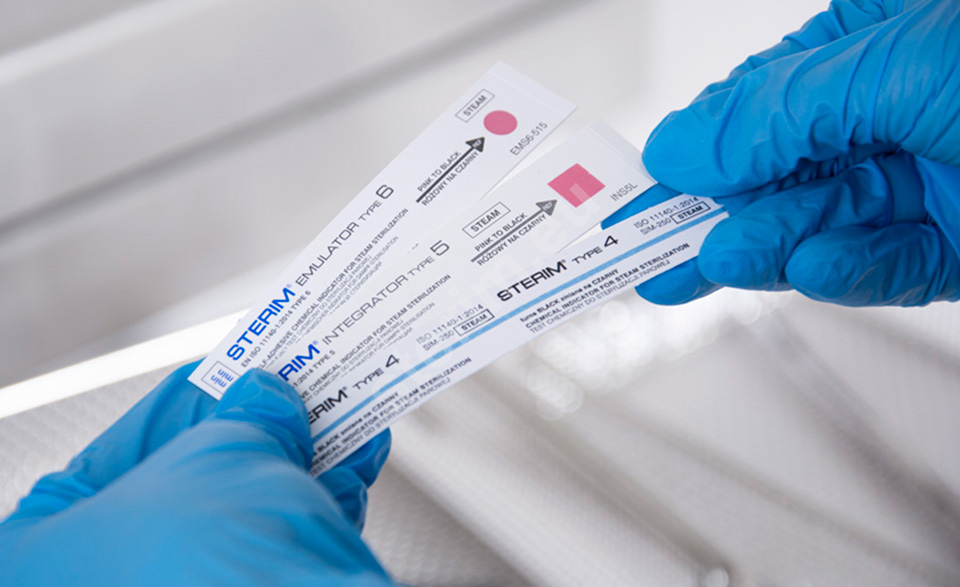
Table of contents
1. Chemical indicators used in sterilization process control
2. Types (formerly classes) of chemical indicators
3. Chemical test and the type of sterilizer used
4. Obligation to perform sterilization control tests
Chemical indicators used in sterilization process control
Chemical sterilization control tests are available in several variants, differing in the scope of control and level of precision. From basic ones – confirming only that a given pack has been subjected to a sterilization process – to advanced indicators confirming the effectiveness of sterilant penetration (important in the case of porous or tubular medical materials).
Types (formerly classes) of chemical indicators
Currently, for the most common method of steam sterilization, four types of indicators are widely used: 1, 4, 5 and 6. The higher the number, the more advanced the test. Types 2 and 3 are used less frequently or only in specific cases and applications.
Chemical sterilization control tests type 1
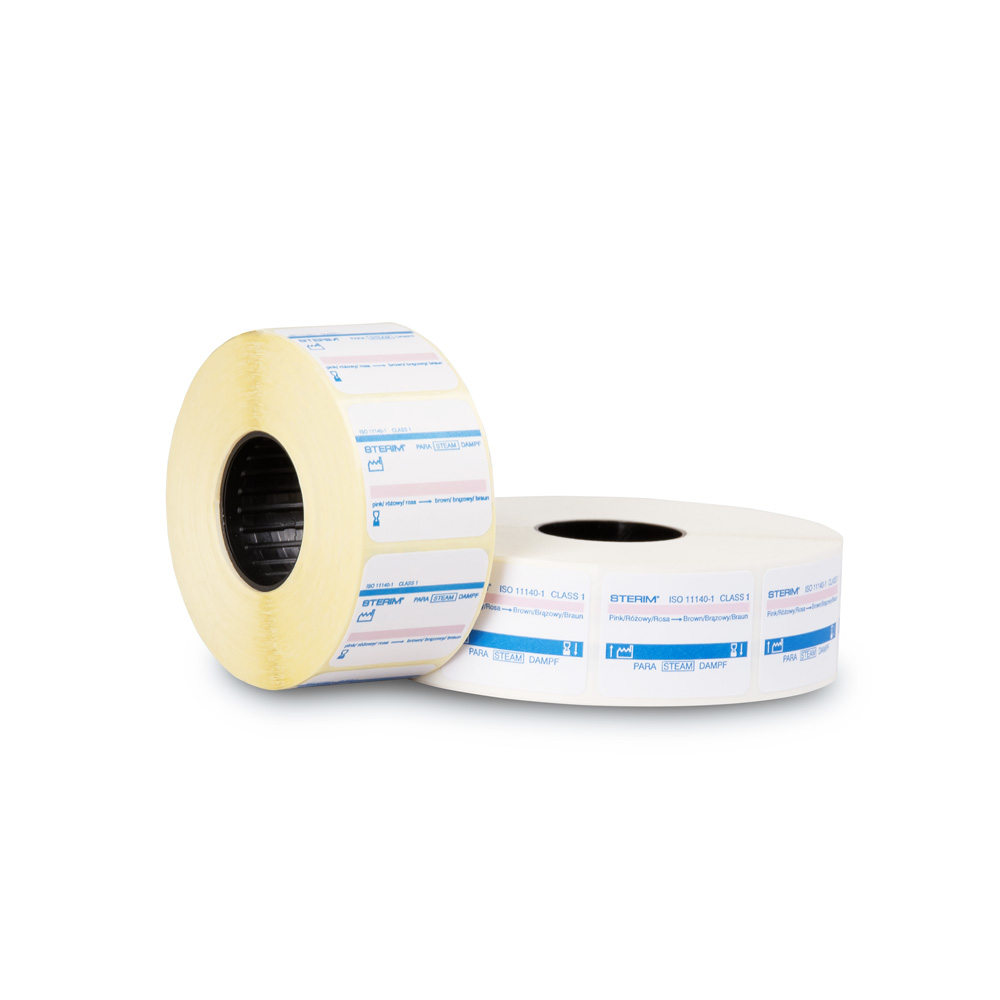
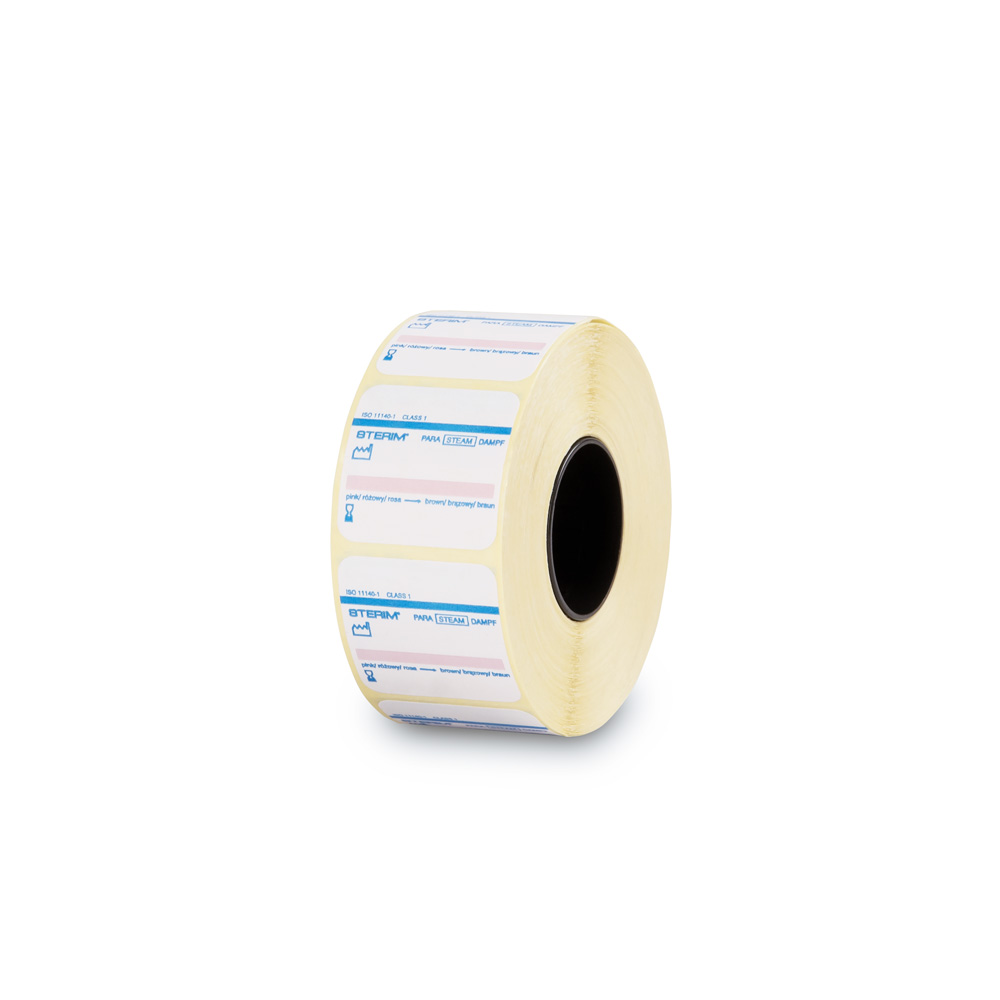
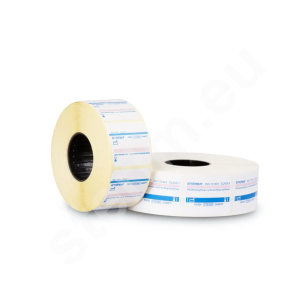
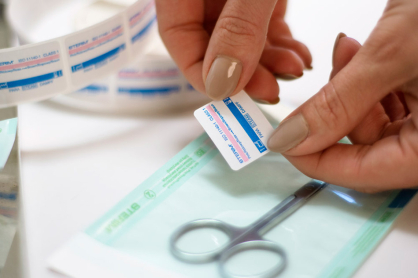
They are used to confirm that sterilization has been carried out, without verification of process parameters. They are the only ones placed on the outside of the packaging and in most cases are factory-applied to sterilization pouches or reels. Type I indicators are also found on self-adhesive sterilization pack labels. They do not confirm the correctness of the sterilization process!
Chemical sterilization control tests type 2


Type II sterilization tests are used for specific procedures. This category includes the Bowie & Dick test pack or the PCD Helix test. Each of these tests has a defined task in verifying the correctness of the sterilization process or the performance of the autoclave.
Chemical sterilization control tests type 3
Type III tests are indicators used to monitor a single parameter of sterilization. They are currently not used in steam or plasma sterilization due to their limited control range.
Chemical sterilization control tests steam type 4

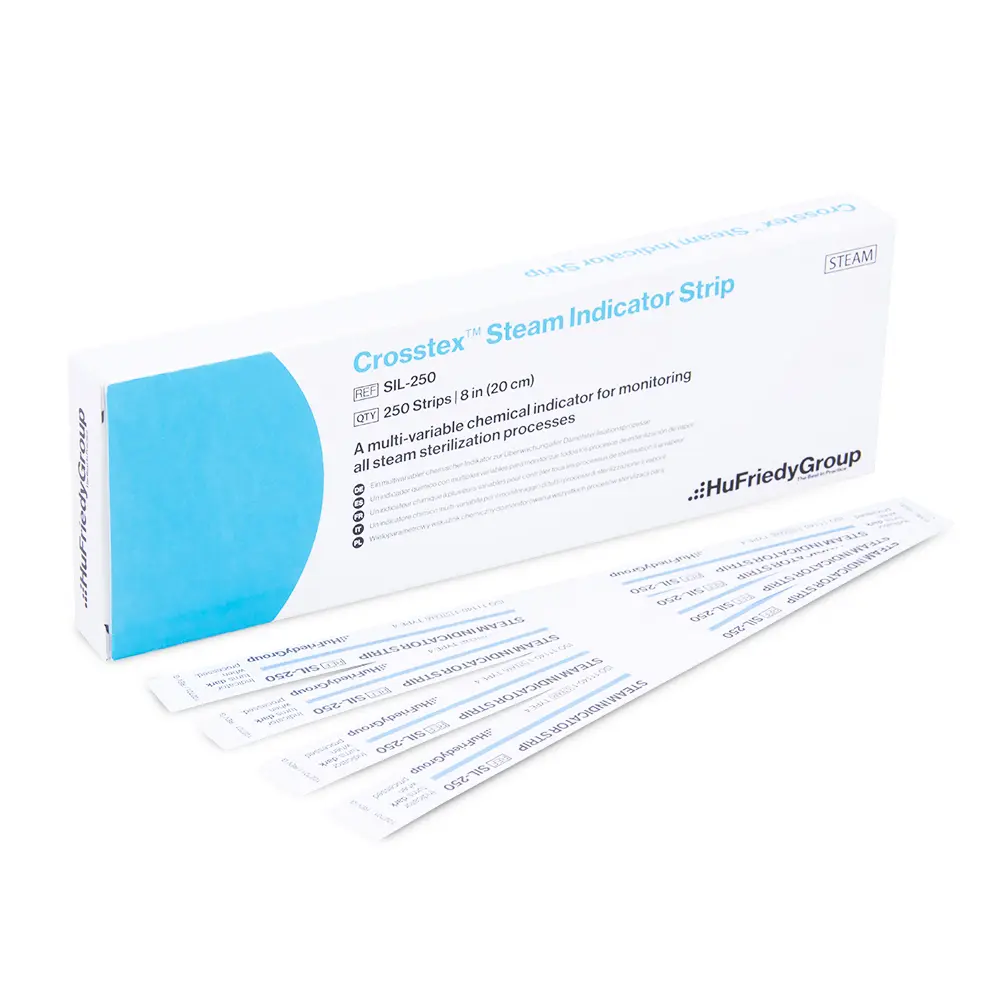
e.g. Sterim type 4 tests are multiparameter indicators, assessing the simultaneous presence of two key factors: temperature and time. They are most commonly used for monitoring each individual instrument pack.
Chemical sterilization control tests steam type 5
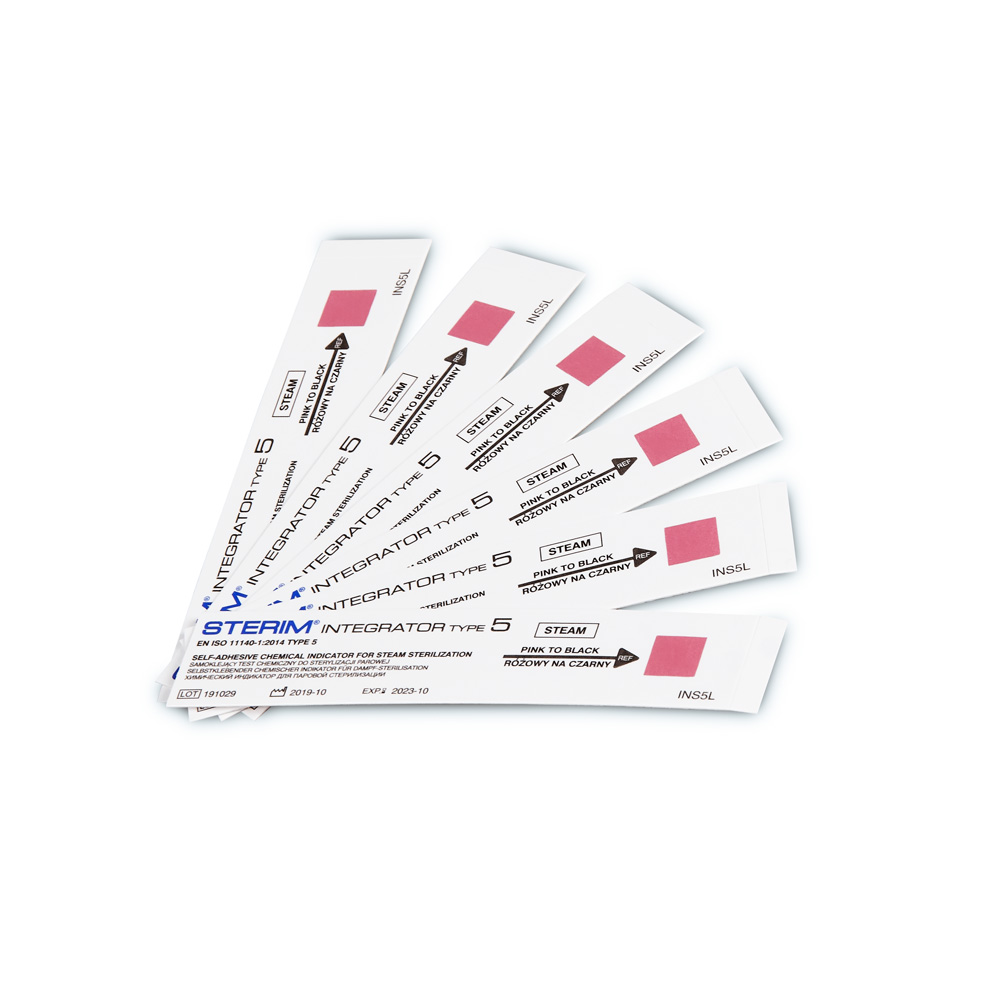

They allow assessment of the presence of steam, process temperature and exposure time. They are available in two versions: the Sterim Integrator 5, which is a classic strip test with a self-adhesive backing, and the Sterim Control 5 integrated test, where the indicator substance moves toward the blue zone, eliminating the need for color interpretation.
Chemical sterilization control tests steam type 6
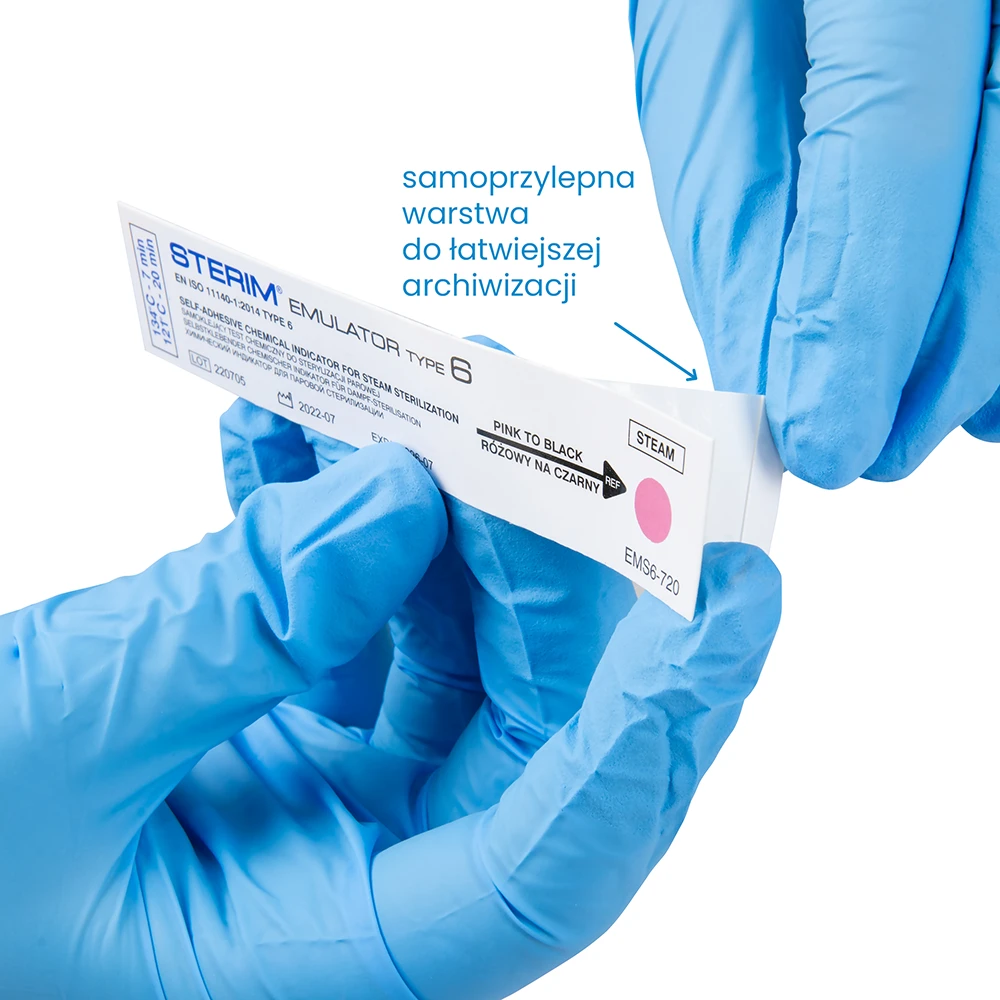
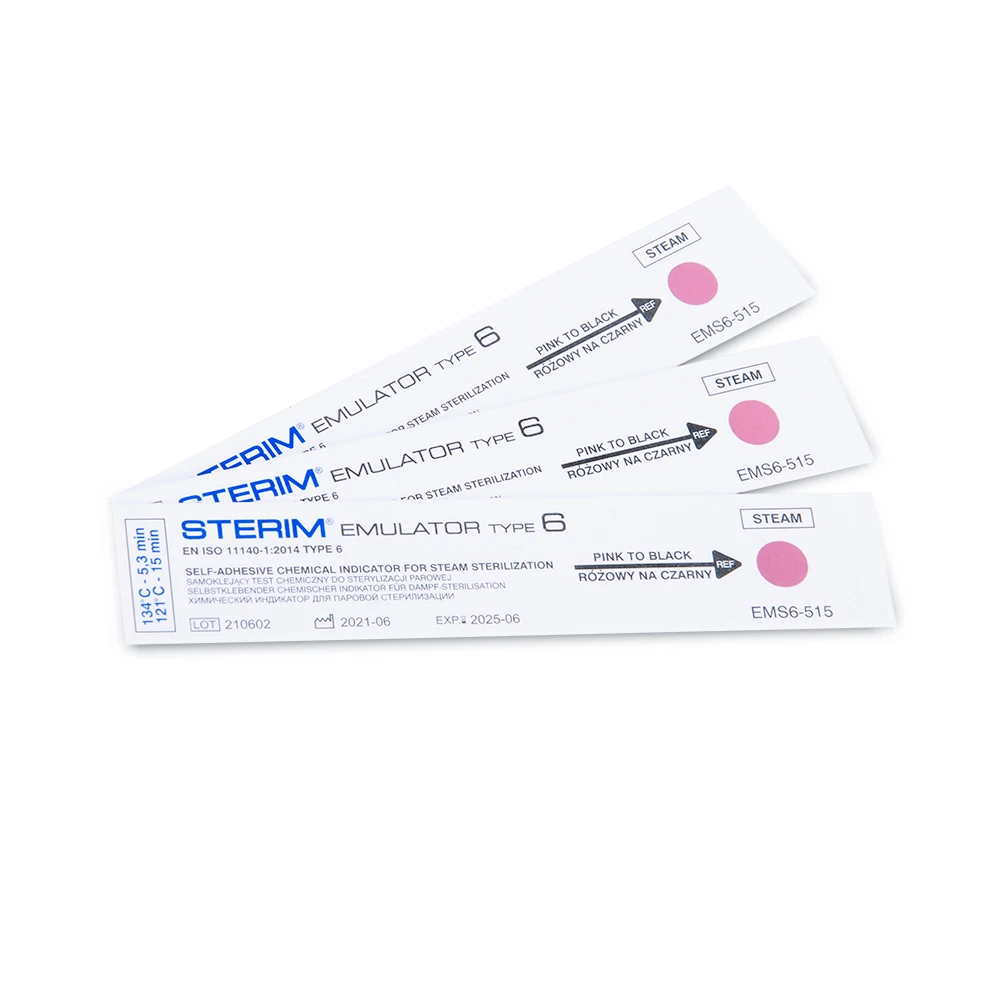
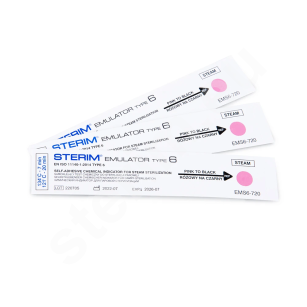
e.g. Sterim Emulator 6, similarly to lower categories, allows assessment of the presence and quality of steam, temperature and exposure time, while also providing reliable information about steam penetration into sterilized material. Thanks to a narrower tolerance range, they are more precise than type 4 and 5 tests. They are often used as control of the entire load in representative packs. Sterim Emulator 6 is available in two versions, 515 and 720, each verifying parameters for different process times.
Chemical test and the type of sterilizer used
While each sterilization method requires dedicated process control methods, there is no need to match indicators to a specific device model. If you have chemical steam sterilization indicators, they can be used in any autoclave model from any manufacturer, regardless of chamber size, number of trays, etc.
However, this does not mean that every test is suitable for all sterilizer settings. If your device runs a sterilization cycle of 7 minutes at 134°C, do not use tests designed for a 15-minute cycle at 121°C. Always check this carefully, especially when purchasing type VI tests, which are available in two time variants.
Of course, the sterilizer must be functioning properly, tests must be certified, and sterilization processes must be documented in accordance with applicable regulations.
Obligation to perform sterilization control tests
The sterility of instruments after sterilization cannot be verified directly for a simple reason – they are sealed inside sterilization packaging (usually pouches or reels). Any breach of the packaging would compromise sterility and invalidate the test result.
It has been established that monitoring sterilization process parameters is sufficiently reliable. It is assumed that all microorganisms, if exposed to defined conditions (steam temperature, pressure, time), will be inactivated. To confirm that the required parameters have been achieved, regular monitoring of sterilizer performance using Bowie & Dick tests is necessary, along with routine control of each sterilized pack using certified chemical indicators compliant with PN EN ISO 11140-1. Biological indicators and printed cycle reports from the autoclave are also required.
Only the confirmation of these three variables – physical, chemical, and biological – provides assurance that sterilization has been carried out correctly.