When is it worth using disposable pads in a dental office?
Disposable hygienic underpads are widely and commonly used both in medical facilities and in beauty salons, cosmetic clinics, tattoo studios, and sometimes even hair salons. Technically, they are not essential, but their properties help improve workflow and efficiency in the workplace. They also undoubtedly influence the overall experience and comfort of patients and clients.
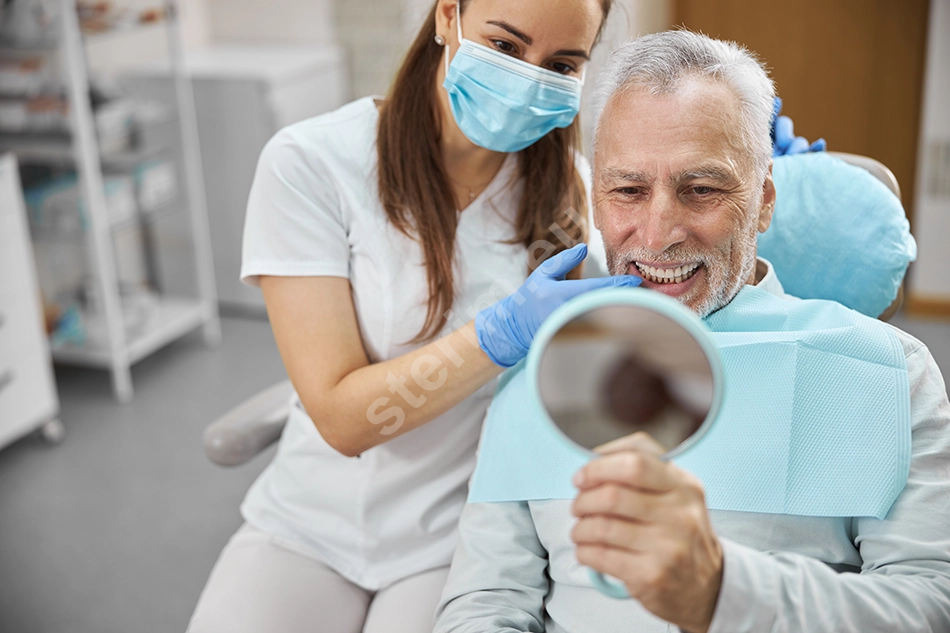
Table of contents:
What are hygienic underpads used for?
 The main purpose of hygienic underpads is separation to avoid contamination. Simply put – they protect against dirt and/or contamination. This may involve protecting both the patient/client and the surfaces or furniture in the treatment room. These two functions may occur separately or simultaneously.
For example – an underpad placed on a treatment couch separates the patient’s body from the couch surface (providing even greater protection against potential microbial contamination while improving patient comfort), and at the same time protects the furniture surface from contamination during procedures (blood, sweat, liquids used during the treatment, etc.).
Standard procedures in clinics, such as regular surface disinfection after every appointment, the use of personal protective equipment, and sterile medical materials, already ensure a sufficient level of hygiene and safety – therefore, the use of underpads is not theoretically necessary.
However, they are extremely convenient and allow for very quick cleanup after the procedure without the need for laborious stain removal. Removing used underpads, disinfecting the area, and preparing the workstation for the next procedure takes very little time.
Typical uses of hygienic underpads.
Although this is not the main subject of the article, we should mention the original purpose of hygienic underpads. Initially, they were used during surgical procedures and in the care of disabled patients with conditions making hygiene maintenance difficult.
 During surgery, the role of the underpad is to absorb blood and other fluids – preventing them from reaching hard-to-clean areas of treatment chairs or tables and from leaking onto the floor. In the second case, underpads help protect mattresses from soaking through (for example in cases of urinary incontinence or uncontrolled bowel movements).
Today, various types of hygienic underpads can be found in almost all types of medical practices, from general examination rooms to specialized treatment clinics. Underpads are also widely used in the beauty industry – as protection against stains from products and preparations (e.g. in tattoo studios or during hair coloring procedures) and as a factor increasing client comfort and the feeling of hygiene and safety (a soft, pleasant-to-touch, fresh underpad on the treatment bed).
Types of underpads and their use in dental clinics.
The common feature of all hygienic underpads is their porous texture and absorbency. The goal is for both solid and liquid contamination to remain on the surface or be absorbed into the material rather than pass through further. Manufacturers carefully select the paper weight to balance absorbency and durability. At the same time, they ensure the material is thin enough for easy disposal after use.
In everyday practice within medical facilities and beauty salons, paper underpads and paper-foil underpads are the most commonly used. In the latter case, as the name suggests, the paper layer is combined with a thin foil layer that prevents leakage.
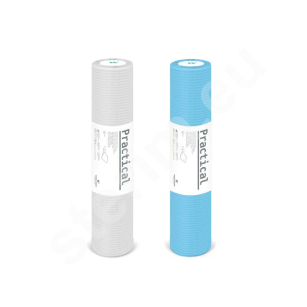
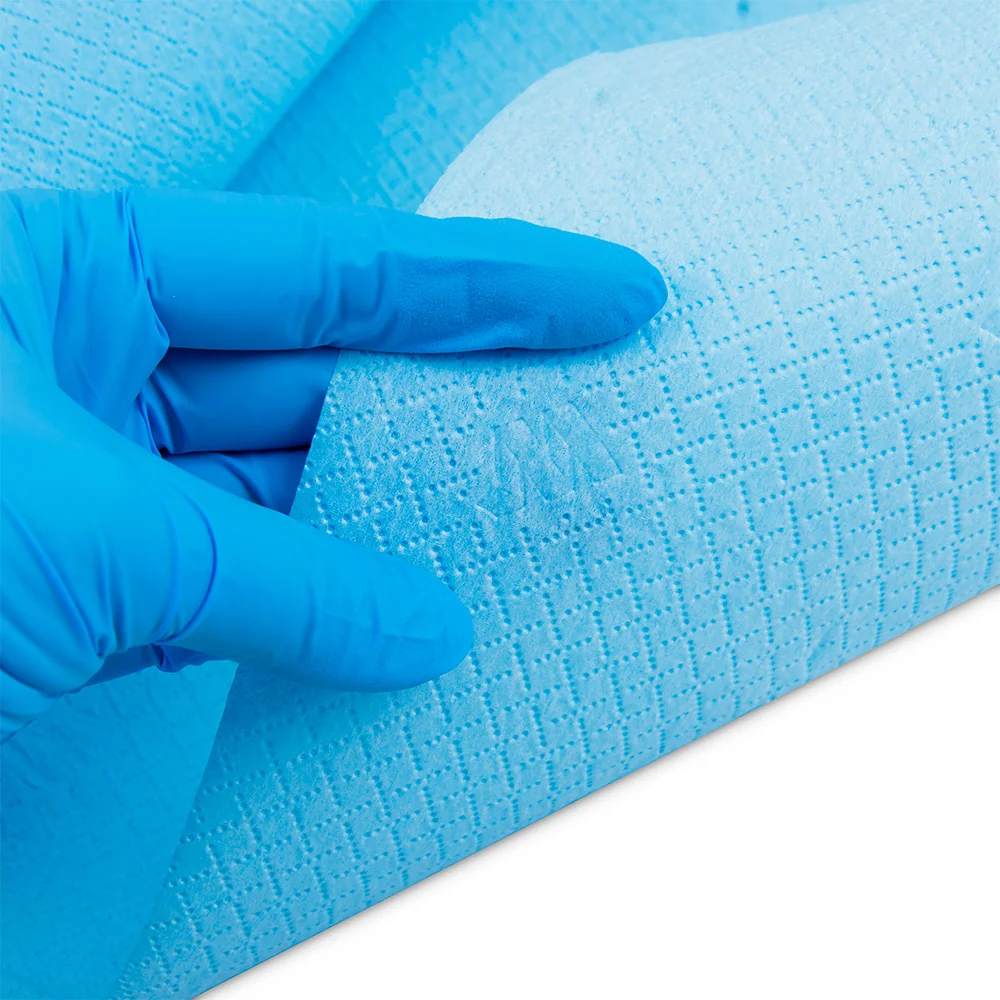
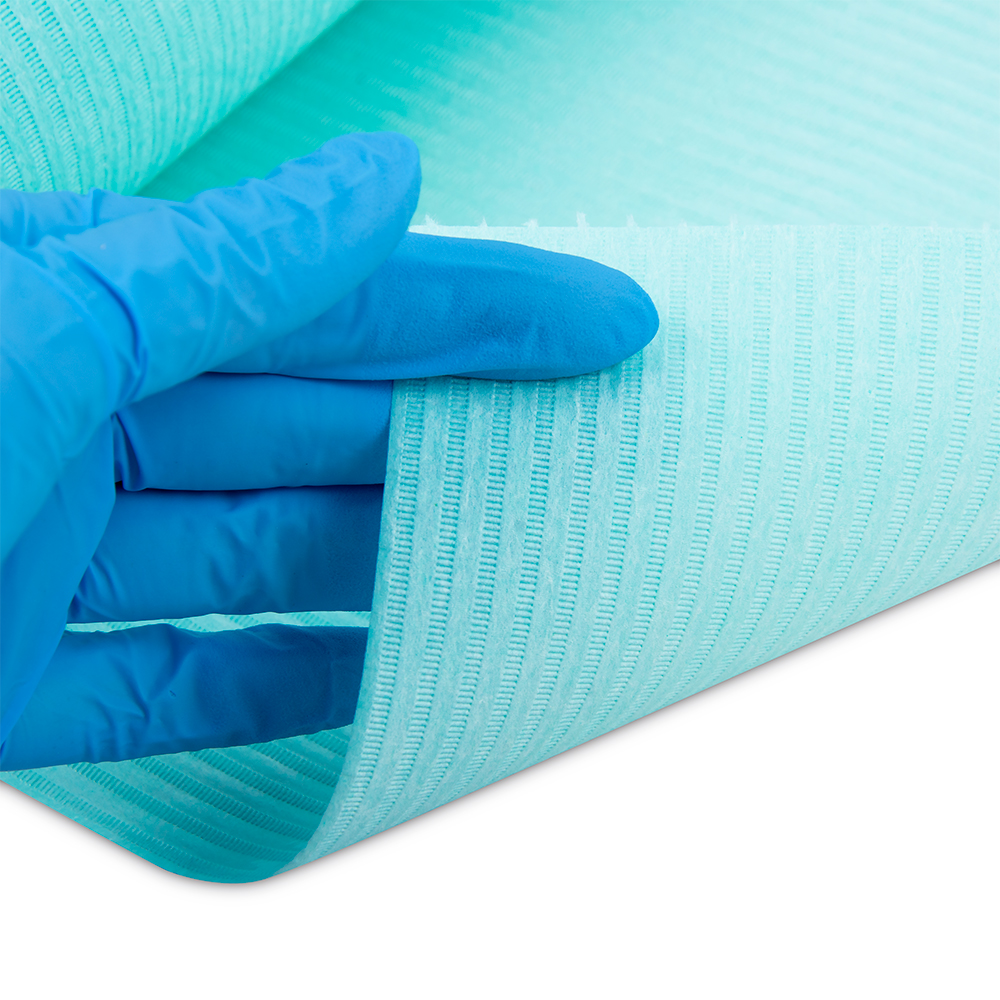
The differences between various types of underpads can be illustrated using products available in the Sterim online store. Basic MedixPro paper underpads by Weber&Weber consist of two layers of tissue paper, while Practical underpads (from the same manufacturer) consist of a paper layer and a thin foil layer. In both cases, the surface remains delicate, pleasant to the touch, and non-irritating.
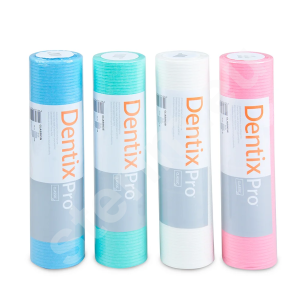
A specific variation of underpads are dental bibs, used to protect patients’ clothing during dental procedures. Compared to the products mentioned above, they differ in both size and construction. While the previously mentioned underpads are 60 cm wide and based on tissue paper weighing 34–36 g/m², the DentixPro Classic dental bibs by Weber&Weber measure 48 x 33 cm and use paper with a weight of 54 g/m².
Underpads are sold in rolls with perforation for easy tearing of the required section. Various color options are available, which not only improve aesthetics but also facilitate quick identification of products intended for specific uses in everyday work (for example distinguishing a roll intended for chair protection from a roll of dental bibs).
It can be said without exaggeration that thanks to their properties and advantages, disposable underpads have become a “must-have” in most dental clinics.