What requirements must a medical waste container meet?
Medical waste can be hazardous. It may be a source of biological or chemical contamination and can also cause injuries such as cuts. It requires special handling. The applicable rules are clearly defined by regulations, and practices in medical offices and beauty salons are carefully verified during inspections by the sanitary authorities.
Table of contents:
Types of medical waste
To begin with, let's take a look at the types of medical waste we may encounter.
Medical waste generated in healthcare facilities is regulated by the Act of 14 December 2012 on Waste, while detailed requirements are set out in the Regulation of the Minister of Health of 5 October 2017 and the Regulation of the Minister of Climate of 2 January 2020 on the waste catalogue (Journal of Laws of 2020, item 10).
The key distinction is between three categories of waste, each with different characteristics and, consequently, a different level of risk:
-
Infectious waste, including body parts and organs, blood containers and preservatives used for blood storage, as well as other waste containing viable pathogenic microorganisms or their toxins and other forms capable of transferring genetic material (which are known, or for which there are reliable grounds to believe, to cause disease in humans and animals), requires the strictest procedures.
-
Hazardous waste includes certain chemicals, cytotoxic and cytostatic medicines, as well as dental amalgam.
-
Other non-hazardous waste includes uncontaminated surgical and treatment instruments and their remnants, non-toxic chemicals and medicines.
Special containers for infectious waste
Due to the high level of risk associated with infectious waste, it requires special handling. Double packaging is necessary, while items with sharp edges or points must be placed in rigid, puncture-resistant containers. Reusable container systems do exist, but they are used exclusively in very large-scale facilities.
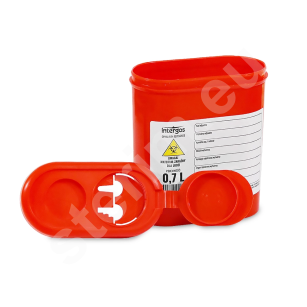
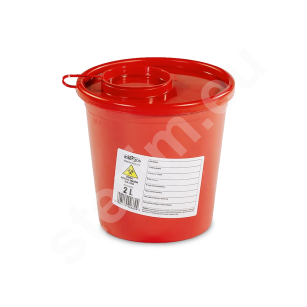
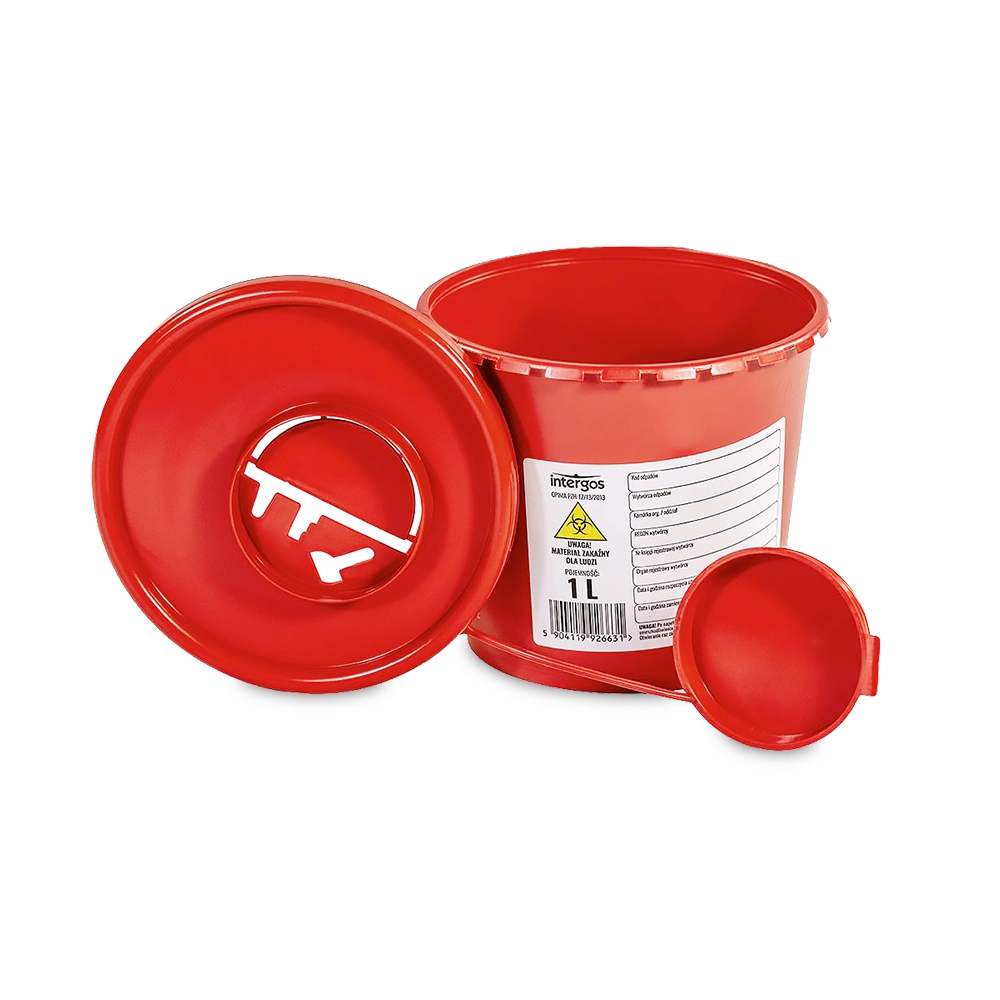 In the vast majority of cases, disposable containers are used. They are available in various capacities, allowing the size of the container to be selected according to the specific nature and needs of a particular practice. Infectious waste containers are fitted with large labels with designated fields for entering important information.
A very popular round container available from the Sterim store has a capacity of 3.5 litres. However, when a practice generates smaller amounts of infectious waste, a small, flattened 0.7-litre container is also an excellent choice. Both types feature secure closures and characteristic “teeth” around the opening, which allow needles to be removed from syringes without using hands. This is an additional feature that helps reduce staff contact with hazardous objects.
Rules for separating medical waste generated in medical practices and storage requirements
The basic recommendation is to separate waste at the point where it is generated, without any intermediate stages. This means that each type of waste must be placed in the appropriate container immediately in the treatment room or operating theatre. The waste will then remain in this container until it is transferred for disposal.
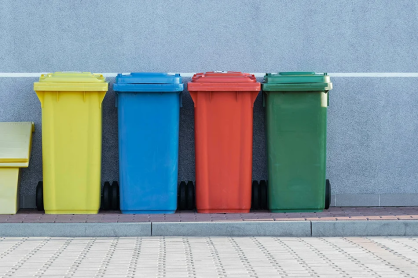
A colour-coding system has been adopted to standardise waste segregation and disposal (infectious waste – red, hazardous waste – yellow, other waste – blue). These colours are used for waste bags as well as rigid containers intended for collecting items with sharp edges or points.
Bags and containers must be equipped with a single-use closure system, meaning that once the packaging has been closed, it must not be possible to reopen it. They must also be clearly labelled with information about the type of waste and the date of closure. This is related to another requirement: compliance with the maximum storage time for waste in the practice. For particularly hazardous waste, this limit is as short as 24 hours. It is also important to maintain the specified storage temperature. For example, biological waste must be stored under refrigerated conditions (10°C).
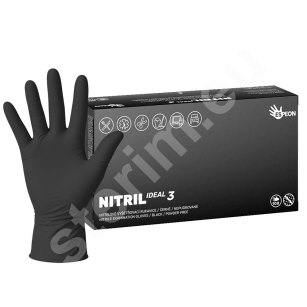
Personal protective equipment must also be provided for people handling and transporting waste containers. The basic protection is disposable gloves, preferably reinforced gloves with increased resistance to damage, such as the Espeon IDEAL model, available from the Sterim store.
Recommendations concerning waste management also include documentation requirements. These primarily involve marking waste containers with BDO codes (Waste Database), recording information on the amount of waste generated and documenting its transfer to specialised waste disposal companies.