Why do chemical sterilisation tests come out negative? Causes and solutions
Your chemical indicators came back negative. The autoclave completed the cycle normally, the warning light does not indicate any malfunction, yet the indicator substance on the strip did not change color or changed only partially. What should you do now?
This is one of the most frequently asked questions by owners of beauty and dental clinics. In this article, we explain how to interpret chemical indicator results, what the most common causes of a negative result are, and what steps to take when a test fails.
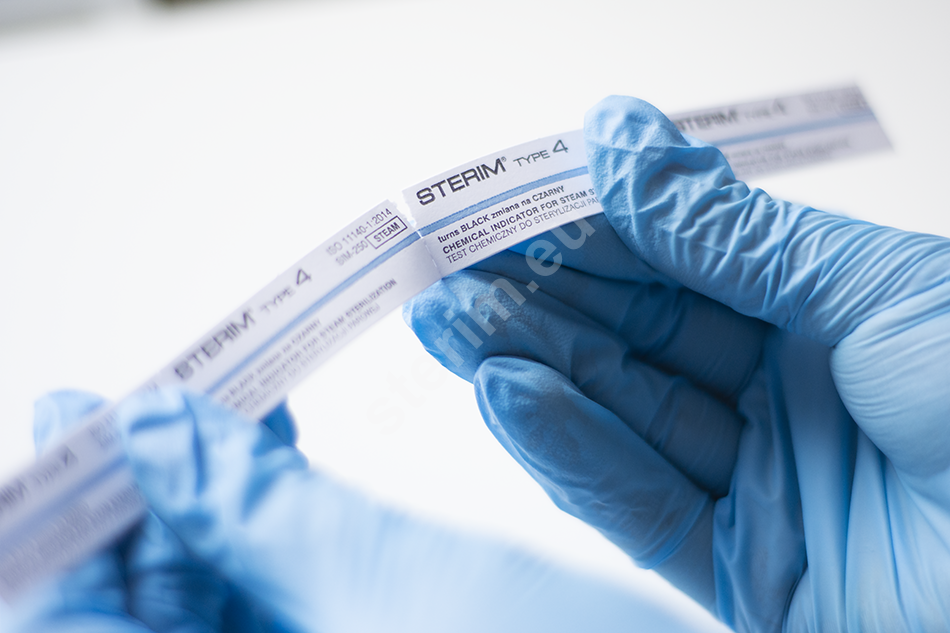
Table of contents
Types of chemical sterilisation tests – differences and comparison
Before we move on to the causes of a negative result, it is worth making sure you are using the right test for your steriliser and the type of procedures you perform. This is a more common issue than most people realise.
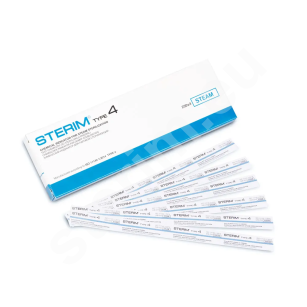
Clinics typically use multi-parameter chemical indicators of types 4, 5 and 6. They differ in the number of parameters they monitor, their accuracy, and their intended application:
|
Feature |
Type 4 |
Type 5 |
Type 6 |
|
Parameters monitored |
temperature and time |
temperature, time, presence of steam |
All variables for a specific predefined cycle |
|
Accuracy |
Basic |
High |
Highest |
|
STERIM example |
Emulator 6 STERIM, e.g. EMS6-515 |
||
|
Base price per single test |
€0.02 |
€0.09 |
€0.09 |
A practical note: choosing between type 4 and type 6 is not only about accuracy, but also about cost. With several sterilisation cycles per day, the difference between using a type 4 and a type 5 test strip is usually just a few euros per month.

Type 4 chemical indicators respond to at least two critical process variables: the process temperature and time.

Type 5 integrating chemical indicators – also referred to as integrating indicators – respond to all process variables. The monitored variables are: presence of steam, process temperature and time.
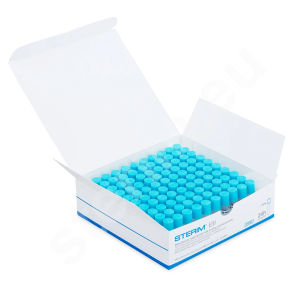
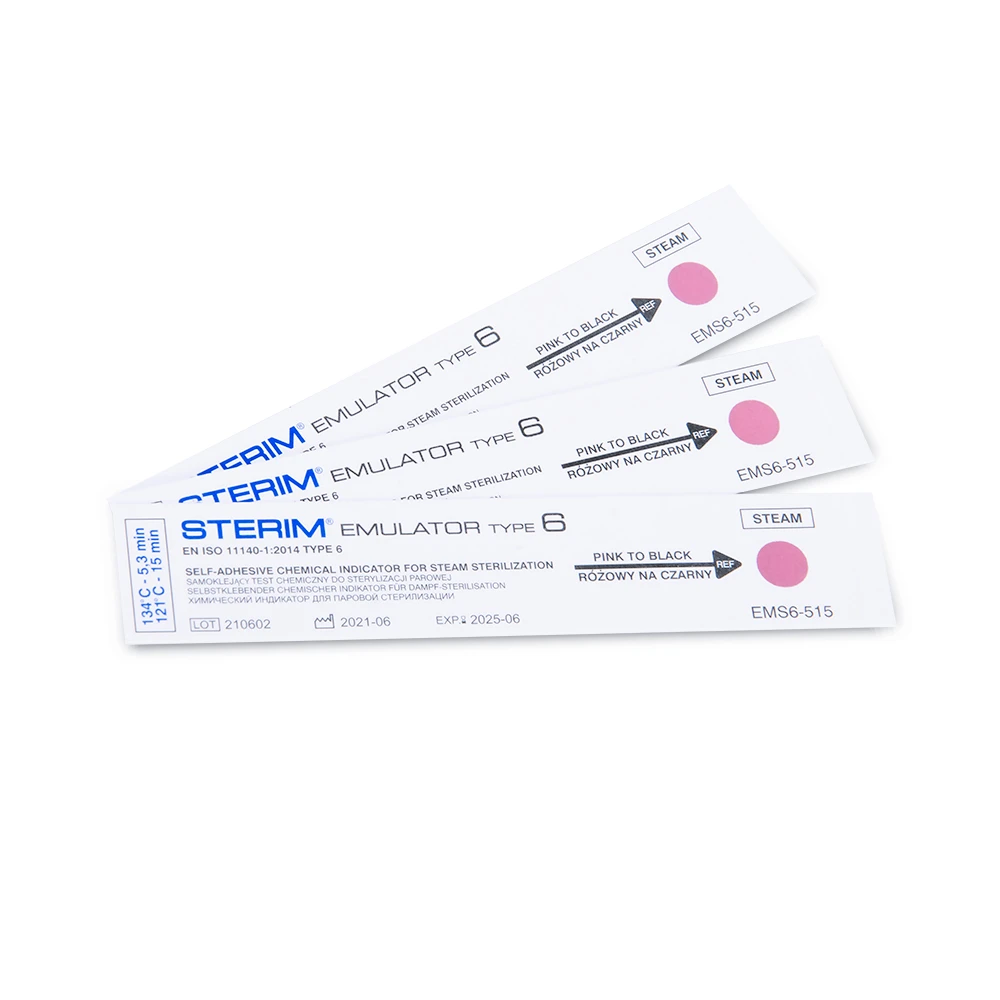 Type 6 emulating chemical indicators respond to all critical process variables at defined parameters. The manufacturer specifies in advance the exact conditions that must be present inside the steriliser chamber, and confirmation of these conditions is provided by a colour change in the indicator substance. The STERIM Emulator 6 steam sterilisation test strips, for example, cover four scenarios: sterilisation at 134°C for 5.3 minutes, at 121°C for 15 minutes, at 134°C for 7 minutes, or at 121°C for 20 minutes.
How to correctly read a chemical test result
Sterilisation effectiveness must be verified without opening the sterilisation pouches. The reason is simple – once opened, the contents of the pouch would no longer be sterile.
The assessment is therefore always visual: it involves evaluating the colour change of the indicator substance. This sounds straightforward, but the details matter.
Positive result – the indicator substance has changed colour as described in the manufacturer's instructions (e.g. from blue to black, from pink to black, or the substance has "migrated" to the target field). This means the critical process parameters have been reached.
Negative result – no colour change, or an incomplete change (the substance did not reach the target field, or did not change across its entire surface). This means one or more process parameters were not met.
NOTE: A colour change on a chemical indicator confirms that the process parameters were reached – this does not, however, guarantee the sterility of the pouch contents. Final confirmation of sterility requires biological tests. Chemical tests are the first line of monitoring, not the only one.
Why does a chemical test come out negative? 6 most common causes
A negative test result is a signal that something went wrong during the sterilisation process and the source of the problem must be identified and eliminated. The source can vary and does not always involve a equipment fault. In every case, however, a negative chemical test result requires the entire load to be repacked and re-sterilised.
Below are the 6 most common causes.
1. Autoclave malfunction
This is the first thought that comes to mind – and not without reason. The most common faults affecting the test result are:
- Worn or damaged chamber seal – prevents the vacuum needed for proper steam penetration from forming
- Faulty temperature sensor – the autoclave "sees" the target temperature but does not physically reach it
- Heating element or heating circuit failure – the cycle completes, but the temperature is too low
- Dirty chamber or blocked filters – contamination can impair steam quality
If you have ruled out user errors (see below) and the test still comes out negative, book a service inspection without delay. A faulty steriliser must not be used until the fault has been resolved.
2. Instruments packed too tightly inside the pouch
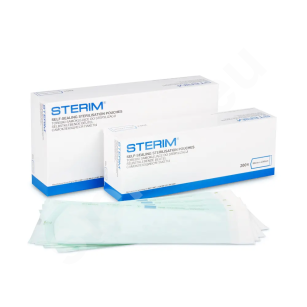
If instruments are arranged too densely, steam cannot reach all surfaces. The result: the cycle appears to run correctly from the autoclave's perspective, but the interior of the pouch never reaches the required parameters.
Key packaging rules:
- Tools must not be in contact with each other without gaps
- Hinged instruments (forceps, scissors) must be positioned open – steam cannot penetrate the joint when they are closed
- Heavier instruments at the bottom, lighter ones on top
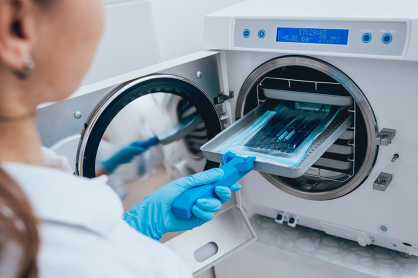
3. Pouches loaded too densely in the autoclave chamber
This error occurs even more frequently than improper instrument packing. In small clinics where time is valuable, the temptation to load as much as possible into a single cycle is understandable. However, the autoclave manufacturer's instructions always specify the maximum number of pouches and how they must be arranged.
The most common loading errors:
- Pouches placed horizontally instead of vertically (or vice versa, depending on the model)
- The foil side of a pouch pressed against the chamber wall – this blocks steam circulation
- Pouches stacked tightly on top of each other with no space between them
4. Expired chemical test strips
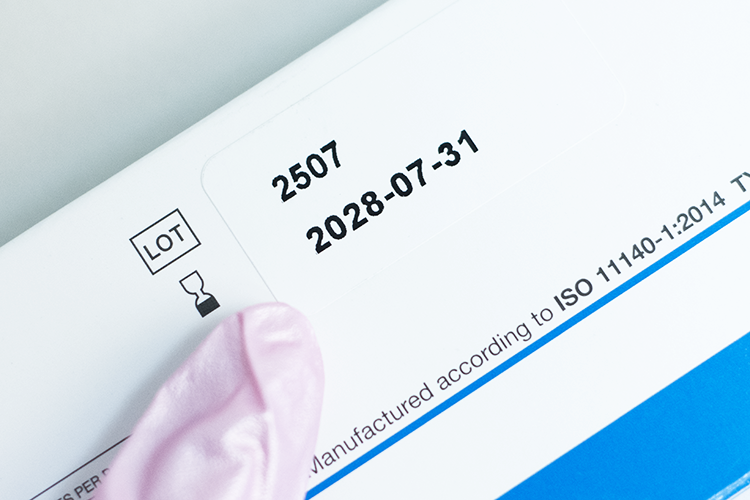
The expiry date on the test packaging is not a bureaucratic formality. The indicator substance literally loses its ability to react to process parameters after a certain period. An expired test may not react at all (negative result) or may react incorrectly (false result).
How to protect yourself:
- Check the expiry date every time you open a new package
- Do not buy test strips in bulk if you cannot use them before their expiry date
- Do not buy second-hand or opened packages if you cannot verify the expiry date
5. Wrong test type for the cycle or steriliser
Chemical tests are designed for specific sterilisation methods and parameters. A test for steam sterilisation will not work in a plasma steriliser, and vice versa. Equally, a test calibrated for a 134°C/5-minute cycle will give a negative result if used in a 121°C cycle, because it will not reach its activation threshold, or the sterilisation process will run for less time than the test requires.
Always verify:
- Whether the test is designed for your sterilisation method (steam, plasma, ethylene oxide)
- Whether the test parameters match the cycle parameters you are using
- Whether the test complies with the standard required by your local health or sanitary authority for your type of facility
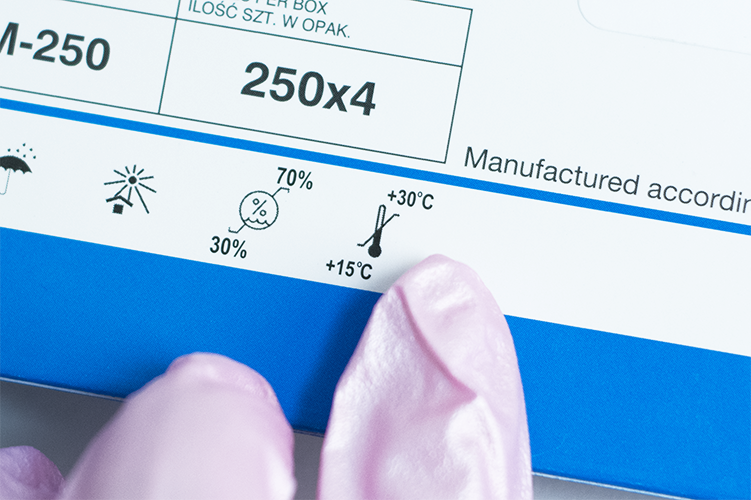
6. Incorrect storage of test strips
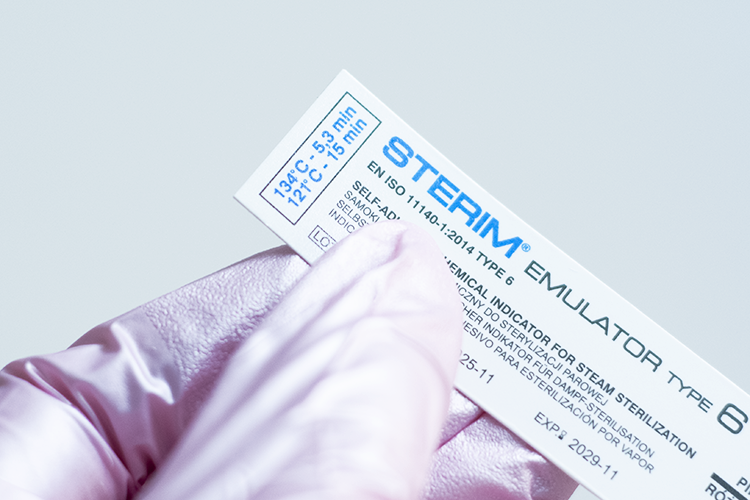
The indicator substance is sensitive to storage conditions. High temperature, humidity and UV exposure can degrade its properties before you even use the test strip.
Storage guidelines:
- Dry, cool location, away from windows and heat sources
- Do not store tests near the autoclave – steam and heat degrade the indicator substance
- Reseal the bulk packaging tightly after each use
- Store the test packaging at the temperature stated on the label
Summary of causes – quick reference
What to do after a negative result – step-by-step instructions
A negative chemical test result is not a disaster. It is information that must be taken seriously and the cause eliminated systematically. Here is how to proceed:
- Do not use any instruments from the questioned load. Until the cause has been identified and the load re-sterilised, treat all instruments as non-sterile.
- Check the simplest causes first: the expiry date of the tests, whether the test type matches the cycle, and whether the pouches were loaded correctly.
- Repeat the cycle with a fresh test strip, a correctly loaded chamber and a new pouch – if the result is positive, the cause was user-related.
- If the problem recurs, stop using the autoclave and book a service inspection. Do not attempt to sterilise "on instinct" until the fault has been rectified.
- Document the incident – record the date, the test batch number, the cycle number and the actions taken. Should an inspection by your local health or sanitary authority take place, this documentation will show that you acted correctly.
- Repack the entire questioned load and re-sterilise it once the cause of the problem has been resolved.
When a negative result is not the autoclave's fault
It sometimes happens that the autoclave is functioning correctly, yet the test still comes out negative. In such cases, look for the cause outside the machine:
Old or damaged test strip – if the bulk packaging has been open for a long time or stored incorrectly, the indicator substance may have degraded before use. Test a fresh strip from a newly opened package.
Test strips from different batches mixed together – if you have strips left from one package and add new ones, do not mix them. It may then become difficult to determine which expiry date applies to which strip.
Reading error – rare, but it happens, particularly in poor lighting or when the person reading the result is not familiar with a specific product. Check how the manufacturer describes the colour change of the indicator substance.
FAQ – frequently asked questions
Does one negative test mean all instruments from that cycle are non-sterile?
Yes – the entire questioned load must be treated as non-sterile until it has been re-sterilised after the cause of the problem has been eliminated.
Does a chemical test guarantee the sterility of instruments?
No. A chemical test confirms that the process parameters were reached. Sterility is confirmed by a combination of three factors – physical (the autoclave printout), chemical (test strips) and biological (biological indicators). It is generally accepted that a positive result for two of these three factors is sufficient to release a load from the autoclave for use on a patient or client.
How often should chemical tests be carried out?
A chemical check should be performed with every sterilisation cycle. This is not excessive – it is the foundation of the process documentation required by health and sanitary authorities.
What should I do if the test repeatedly gives ambiguous results – neither clearly positive nor clearly negative?
Treat an ambiguous result as a negative result. This may indicate that the autoclave is operating at the very edge of its parameters – for example, the temperature is reached but only for part of the process, or the steam inside the chamber is insufficiently saturated.
Where can I buy good chemical sterilisation tests with full documentation?
Look for tests compliant with the EN ISO 11140-1 standard from a supplier who can provide a Declaration of Conformity. STERIM offers a full range of type 4, 5 and 6 chemical tests for steam, plasma and hot-air sterilisation, together with complete documentation.
We're here to help! |
|
Do you have a question about selecting the right tests for your autoclave, or are you unsure which test type is required for your type of facility? Our team of specialists will answer your question – |